


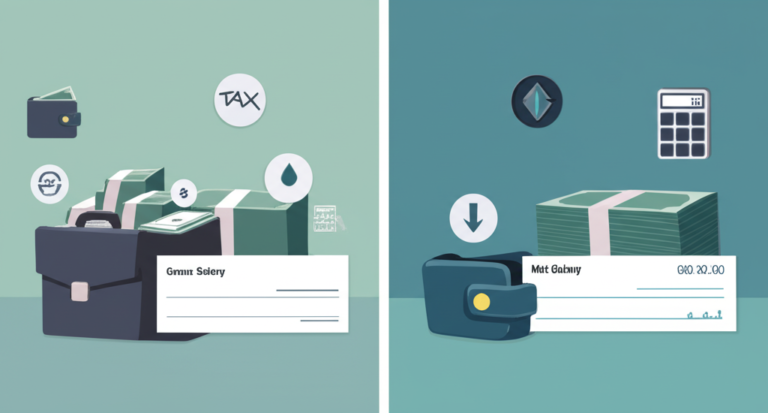
When it comes to personal finance, understanding the distinction between gross salary and net salary is fundamental. Gross salary, also known as the total salary or CTC (Cost to Company), is the total amount of money an employer spends on an employee. On the other hand, net salary, or take-home salary, is the amount an employee actually receives after deductions.
What is Gross Salary?
Gross salary includes basic salary, allowances, bonuses, and other benefits. It’s the total cost an employer bears for hiring an employee. For instance, if your CTC is $100,000 per annum, it includes your basic pay, HRA (House Rent Allowance), conveyance allowance, and other perks.
Components of Gross Salary
- Basic Salary: The core component of your salary, usually a fixed amount.
- Allowances: HRA, conveyance allowance, and other special allowances.
- Bonuses: Performance bonuses or other one-time payments.
- Benefits: Company-provided benefits like health insurance, retirement plans, etc.
Understanding Net Salary
Net salary is the actual amount you receive after various deductions from your gross salary. These deductions include income tax, provident fund (PF) contributions, professional tax, and other deductions as per the company’s policies.
Deductions from Gross Salary
- Income Tax: The tax deducted at source (TDS) based on your income tax slab.
- Provident Fund (PF): Contributions towards your retirement savings.
- Professional Tax: A state-level tax on your income.
- Other Deductions: This could include health insurance premiums, loan repayments, etc.
Beginner Errors and Financial Myths
Many individuals mistakenly believe that their gross salary is the amount they take home. This misconception can lead to poor financial planning. For instance, if your gross salary is $80,000 and you are in a 30% tax bracket, your net salary could be significantly lower, around $56,000, after taxes and other deductions.
“Understanding the difference between gross and net salary is crucial for effective financial planning.”
Advanced Strategies and Current Scenario
To maximize your net salary, consider the following strategies:
- Optimize your tax deductions by investing in tax-saving instruments like ELSS (Equity Linked Savings Scheme) or PPF (Public Provident Fund).
- Negotiate your salary components; for instance, opting for more allowances that are not taxable.
- Utilize your company’s benefits, such as flexible spending accounts or tax-deferred savings plans.
Practical Checklist
- Review your salary slip to understand the breakdown of your gross and net salary.
- Plan your investments to minimize tax liabilities.
- Take advantage of tax-advantaged accounts for savings.
Frequently Asked Questions (FAQs)
Q: How is gross salary different from net salary?
A: Gross salary is the total amount an employer spends on you, including all allowances and benefits, while net salary is the amount you take home after deductions.
Q: Can I negotiate my gross salary?
A: Yes, you can negotiate your gross salary. Understanding its components can help you make a stronger case.
Q: How can I increase my net salary?
A: You can increase your net salary by optimizing tax deductions, utilizing tax-advantaged savings options, and negotiating non-taxable allowances.
Q: Are bonuses included in gross salary?
A: Yes, bonuses are typically part of your gross salary.
Conclusion
Understanding the nuances between gross salary and net salary is vital for effective financial planning. By grasping these concepts and implementing smart strategies, you can significantly enhance your take-home pay and achieve your financial goals. Don’t miss out on maximizing your net salary; start optimizing today!